Quick Links
Paediatric Ophthalmology & Squint Services
Paediatric ophthalmology deals with diagnosing and treating eye conditions in infants, children, and adolescents. Children's visual systems are still developing, making early detection and treatment crucial to avoid permanent vision problems such as amblyopia (lazy eye) or strabismus (squint).
Orthoptics is a subspecialty focusing on evaluating and managing eye alignment disorders and binocular vision issues using both non-surgical (therapeutic) and surgical methods. Our goal is to restore clear, comfortable vision and proper eye coordination in children and young adults.
From routine vision screenings to advanced squint correction surgeries, our comprehensive care ensures optimal outcomes tailored to the needs of growing eyes.
Read More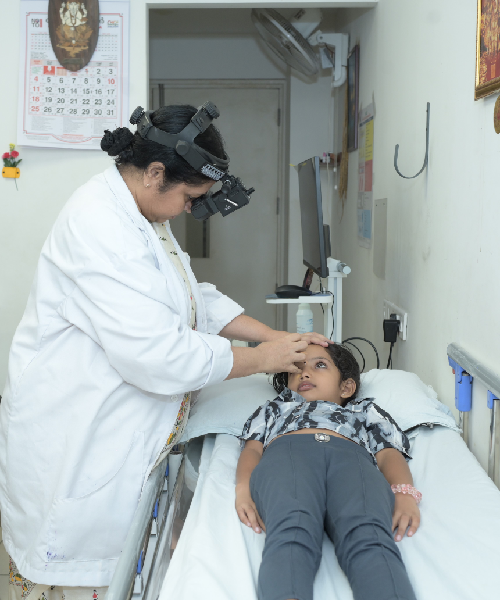
Common Paediatric Eye Conditions
Refractive Errors in Children
Undiagnosed myopia (nearsightedness), hypermetropia (farsightedness), or astigmatism can affect a child’s academic performance and daily life. Early correction with glasses or contact lenses helps prevent lazy eye development.
Amblyopia (Lazy Eye)
A condition where one eye has reduced vision due to lack of use, often caused by strabismus or uncorrected refractive errors. Treatment includes patching the better-seeing eye and vision therapy.
Strabismus (Squint)
A misalignment of the eyes that can be constant or intermittent. Early diagnosis and treatment with glasses, vision therapy, or surgery are crucial to restore binocular vision and prevent amblyopia.
Congenital Cataract or Ptosis
Clouding of the lens or droopy eyelids from birth can interfere with visual development. These conditions often require early surgical correction.
Tear Duct Blockage (Congenital Nasolacrimal Duct Obstruction)
Frequent watering or discharge in infants may be due to tear drainage issues, often managed with massage or minor procedures like probing.
Retinopathy of Prematurity (ROP)
A potentially blinding condition affecting premature babies, requiring timely screening and, if needed, laser or injection therapy.
Orthoptic and Binocular Vision Disorders
Convergence Insufficiency
Difficulty in maintaining eye alignment during near work like reading, leading to eye strain or blurred vision.
Accommodative Dysfunction
Trouble shifting focus between distances, often causing fatigue during close-up tasks.
Diplopia (Double Vision)
Seeing two images instead of one, commonly due to eye misalignment or nerve-related issues.
Suppression & Loss of Depth Perception
The brain ignores input from one eye to avoid double vision, weakening 3D vision and coordination.
Treatment Approaches
Prescription Glasses
Correct refractive errors or help align the eyes, especially in accommodative squint.
Patching / Penalization
Covers the stronger eye to stimulate vision development in the weaker one (used for amblyopia).
Orthoptic Exercises
Structured visual training to strengthen eye coordination and focus.
Squint Surgery
Adjusts the eye muscles to restore alignment and improve both appearance and function.
Botox Injections
In selected cases, temporarily improves alignment without surgery.
Child-Friendly Diagnostic Technology
Paediatric Visual Acuity Charts
Picture or symbol-based charts help assess vision in pre-verbal or early-speaking children.
Synoptophore
Measures how well both eyes work together and helps detect misalignment, suppression, or poor depth perception.
Hess Screen & Prism Bar Testing
Evaluates subtle eye movement disorders and quantifies muscle imbalances causing squint.
Hand-held Fundus Cameras & Portable Slit Lamps
Essential for examining infants or uncooperative children in a comfortable position.
Optical Coherence Tomography (OCT)
A non-contact scan that provides detailed images of the retina and optic nerve in older cooperative children, useful for diagnosing retinal or optic nerve diseases.
Symptoms in Children That Need Evaluation
Difficulty focusing or poor eye tracking
Struggles to follow moving objects or maintain eye contact during play or reading.
Tilting the head or squinting
Indicates they’re trying to compensate for unclear or double vision.
White spot or abnormal glow in the pupil
Especially visible in photographs; may signal serious conditions like cataracts or retinoblastoma.
Frequent eye rubbing, blinking, or headaches
Common during or after visual activities, suggesting strain or uncorrected refractive error.
Eyes turning inward or outward
Misalignment (squint) can be constant or occasional but needs prompt attention.
Delayed visual response or poor coordination
May reflect developmental or neurological issues affecting vision.
Light sensitivity, excessive watering, or redness
Can indicate inflammation, allergies, or corneal irritation.
Difficulty recognizing faces or objects
Could point to central vision loss or severe uncorrected refractive error.
Causes of Paediatric Eye Issues
Genetic Predisposition
A strong family history of squint, amblyopia, or refractive errors increases risk.
Prematurity or Low Birth Weight
These babies are more prone to developing retinal disorders like retinopathy of prematurity.
Neurological or Developmental Conditions
Disorders such as cerebral palsy or delayed milestones can affect visual development and eye muscle control.
Infections or Eye Injuries
Can lead to scarring, inflammation, or permanent visual impairment if not treated promptly.
Uncorrected Refractive Errors
Early vision problems like myopia or hyperopia, if untreated, can disrupt normal eye development and cause amblyopia.
Congenital Abnormalities
Structural issues present at birth, such as congenital cataracts, ptosis (drooping eyelid), or blocked tear ducts, may impair vision unless managed early.
FAQ's
At what age should my child have their first eye exam?
Children should have their first comprehensive eye check by age 3, or earlier if any symptoms are noticed.
Can squint be corrected without surgery?
Yes, in some cases squint can be managed with glasses, exercises, or patching. However, surgery may be necessary for proper alignment.
Is vision therapy effective for lazy eye?
Yes, when started early, vision therapy combined with patching can significantly improve amblyopic vision.
How long is recovery after squint surgery?
Recovery is usually quick. Most children return to regular activities within a few days, with full healing over 1–2 weeks.
Is ROP screening mandatory for premature babies?
Yes, all babies born before 34 weeks or weighing under 2000 grams should undergo ROP screening to prevent vision loss.