

Quick Links
Low Vision Aids
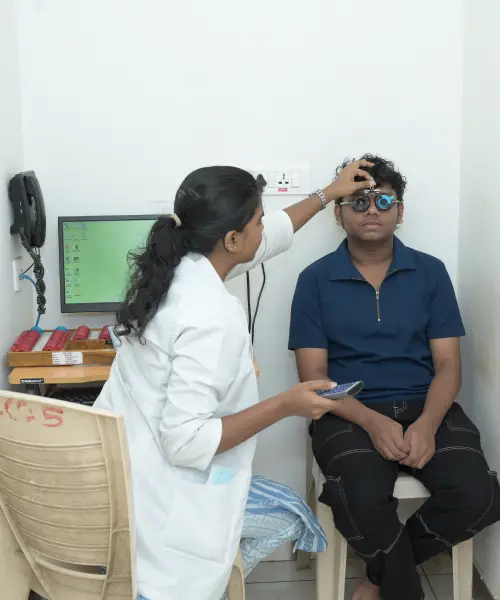
Low Vision Aids are specialized devices and tools designed to help people with significant and permanent vision loss use their remaining eyesight to its fullest potential. Unlike regular spectacles or contact lenses, these aids cannot cure or reverse vision loss — but they can make a huge difference in performing daily activities independently.
They come in various forms, such as:
Optical devices
Hand-held magnifiers, stand magnifiers, telescopic glasses.
Electronic devices
Digital magnifiers, screen-reading software, portable video magnifiers.
Adaptive tools
Large-print books, high-contrast clocks, special lighting systems
These devices are part of a broader low vision rehabilitation program, which aims to help individuals maintain independence, confidence, and quality of life despite reduced vision.
Causes of Low Vision
Low vision can result from a variety of eye diseases, injuries, or congenital conditions. Some of the most common causes include:
Age-Related Macular Degeneration (AMD)
Damage to the central part of the retina, affecting sharp central vision.
Diabetic Retinopathy
Damage to retinal blood vessels due to diabetes, causing blurred or patchy vision.
Glaucoma
Damage to the optic nerve, often leading to loss of peripheral vision.
Retinitis Pigmentosa
A genetic disorder causing gradual vision loss over time.
Severe Eye Injuries or Trauma
Permanent vision loss due to accidents or penetrating injuries.
Advanced Corneal Diseases
Such as keratoconus or scarring from infections.
Congenital Eye Conditions
Present from birth, such as albinism or underdeveloped optic nerves.
Advanced Cataracts
Especially if untreated for a long time or when residual vision loss remains after surgery.
Symptoms of Low Vision
People with low vision may experience one or more of the following symptoms:
- Difficulty reading books, newspapers, or messages on a phone
- Struggling to recognize faces of family and friends
- Needing very bright light to perform close-up tasks
- Poor night vision or difficulty seeing in dim lighting
- Loss of central vision (cannot see things right in front)
- Loss of peripheral vision (tunnel vision)
- Blurred or distorted vision, even with new glasses
- Inability to drive safely
- Difficulty with fine tasks like sewing, cooking, or operating a phone
Benefits & Advantages of Low Vision Aids
Greater Independence
Low Vision Aids allow patients to perform everyday activities such as reading, writing, using a mobile phone, preparing meals, and shopping — without needing constant assistance.
Improved Quality of Life
Being able to engage in hobbies, social activities, and personal interests helps boost mental well-being and reduces feelings of isolation.
Customised Solutions
A wide range of devices is available, and an eye care professional can recommend the most suitable options based on the patient’s condition, lifestyle, and goals.
Easy to Use
Most Low Vision Aids are portable, lightweight, and designed for ease of handling — making them suitable for home, work, or travel.
Adaptability
They can be used alongside other vision rehabilitation strategies, such as mobility training or special lighting arrangements, to maximise vision use.
Continued Engagement in Work and Education
With the right aids, many patients can continue working, studying, or pursuing their passions, even with reduced vision.